A GPS dot is only the beginning
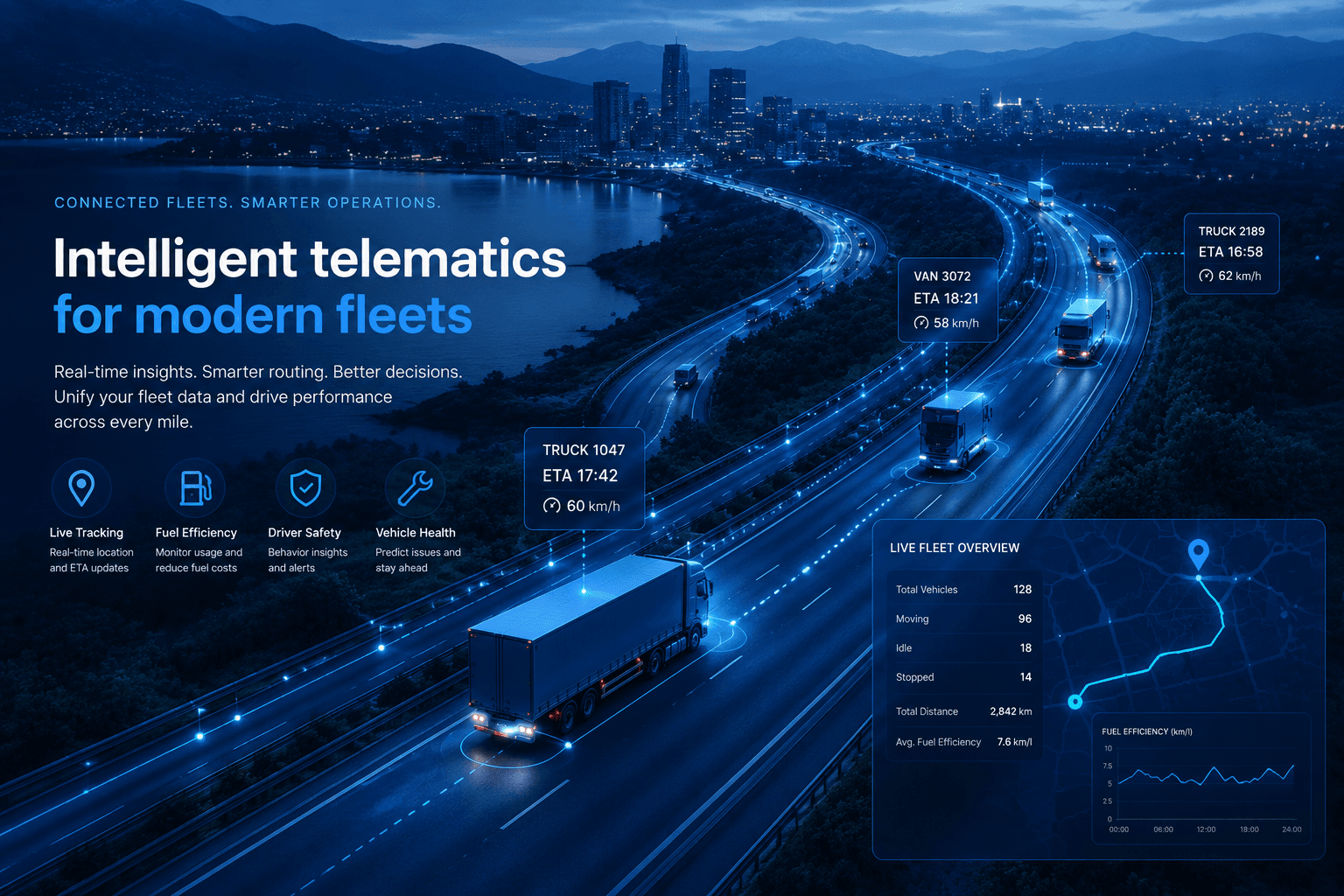
A vehicle location on a map is useful, but modern telematics can deliver much more. Connected vehicles can generate information about location, movement, utilisation, driver behaviour and vehicle condition.
From tracking to prediction
When those signals are analysed together, fleet teams can move from reactive management to predictive operations. Patterns in performance data can indicate that maintenance may be needed before a vehicle becomes unavailable.
Focus on exceptions
Instead of reviewing every trip manually, operations teams can focus on exceptions: unusual routes, excessive idle time, harsh driving events, unexpected stops or vehicles showing abnormal behaviour.
Optimisation becomes continuous
Route decisions can combine traffic, job priority, vehicle availability and operational constraints. The result is a fleet that is easier to understand and easier to manage.
The value is in the decision
Telematics becomes an operational intelligence layer rather than simply a tracking service. For distributed fleets, the long-term advantage comes from turning vehicle data into decisions that improve uptime, safety, resource use and service quality.